
What Monroe County Property Tax Records Show
Assessment and collection are related jobs done by different offices. The assessor decides the property description, its classification, and its value. The Sheriff's Tax Office takes those values and calculates the bill. It uses levy rates set by local taxing bodies. A typical bill shows assessed value, levy rate, total tax due, and payment dates. The public IAS parcel card is sometimes offline. Not every field is available online at all times.
| Field | What It Shows | Where |
|---|---|---|
| Assessed value | Tax base under West Virginia’s assessment rules | Assessor / IAS tax year |
| Classification and description | Property account and class; result fields not fully captured | Assessor |
| Exemption | Exemption details may affect taxable result; local parcel-card fields not verified | Assessor |
| Tax bill and payment | Amount due, installments, payment, and delinquency | Sheriff / Tax Office |
| Tax year and jurisdiction | Year and taxing account selection | IAS and county tax records |
The assessed amount is not the full appraised value. Neither figure matches a deed's consideration. A tax bill simply reflects the assessed base plus whatever levies apply. So never read an old bill or an old value as proof that a payment is still outstanding today.
Who Calculates Monroe County Tax Bills
The assessor and the Sheriff's Tax Office split the work. The assessor values and classifies property. The sheriff's office takes the assessment and calculates the real-estate tax bill from levy rates. Call whichever office owns your missing detail. Ask the assessor about a parcel description, class, value, or exemption. Ask the tax office about a bill, receipt, payment, penalty, or delinquency. The county directory lists the Sheriff/Treasurer at 681-272-0516, the Chief Tax Deputy at 681-272-0518, and a Tax Deputy at 681-272-0519. The Assessor page lists a general office number, and the directory adds direct assessor lines. These routes matter when a web inquiry does not surface the year or transaction you need. The tax office also supports in-person, mail, and online inquiries. The Monroe County tax-office page is the source for bill timing and payment methods.
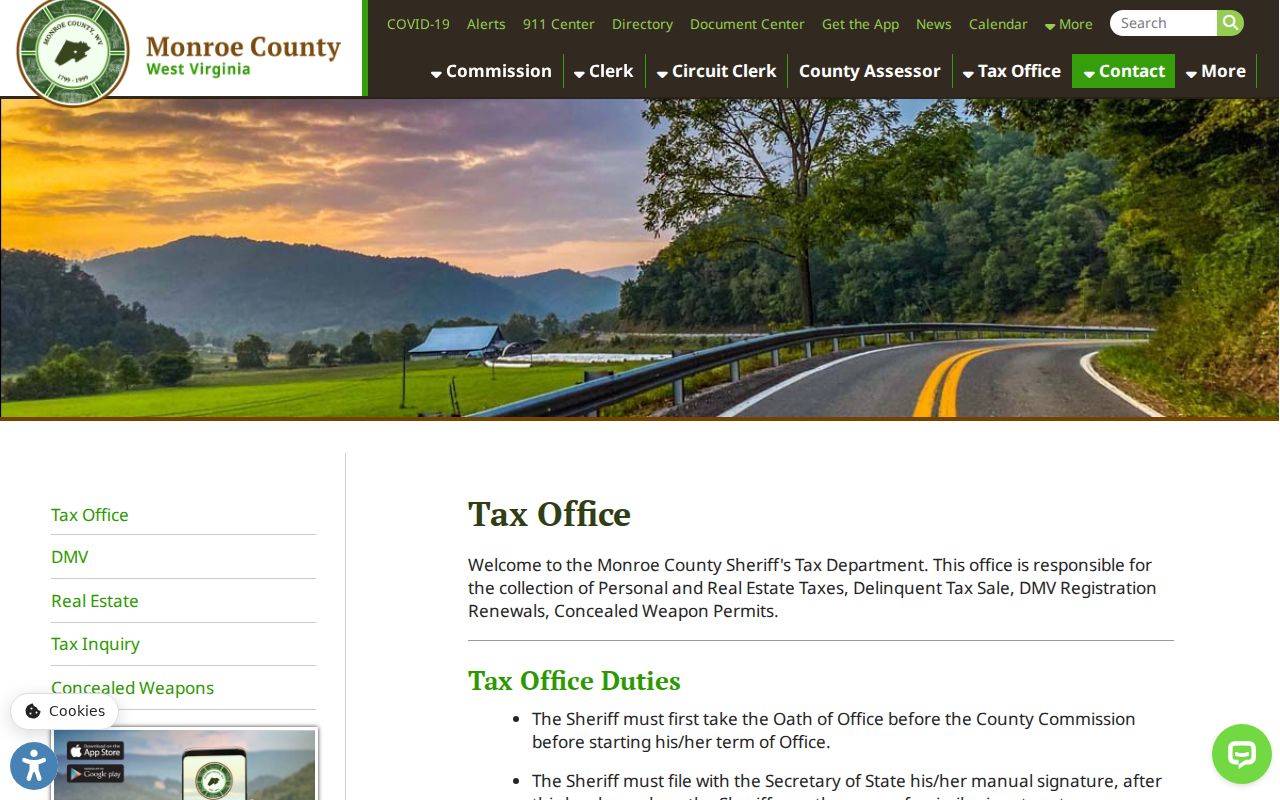
The local tax page is the collection route, not the assessor’s property-card result.
The July Assessment in Monroe County
Monroe County property gets a fresh assessment each year, dated to July 1. W.Va. Code §11-3-1 sets the rule. Assessed value equals 60 percent of true and actual value. Statutory qualifications apply. The state Tax Division describes that figure plainly. It is a tax number drawn from a full-value estimate. A tax bill is not simply 60 percent of a recent sale price. Classification, exemptions, the valuation record, and levy rates all shape the final amount due.
Changes in a property's description, status, classification, or value must reach the records promptly. The deadline is the month after the change occurred. Monroe County does not publish a fixed lag. A closing can take time to reach the tax roll. For a recent transfer, look at the newest deed along with the roll. Compare figures for the same parcel and year. Avoid mixing an old account with a newly split tract. The assessment statute and the state's value explanation back up the distinction.
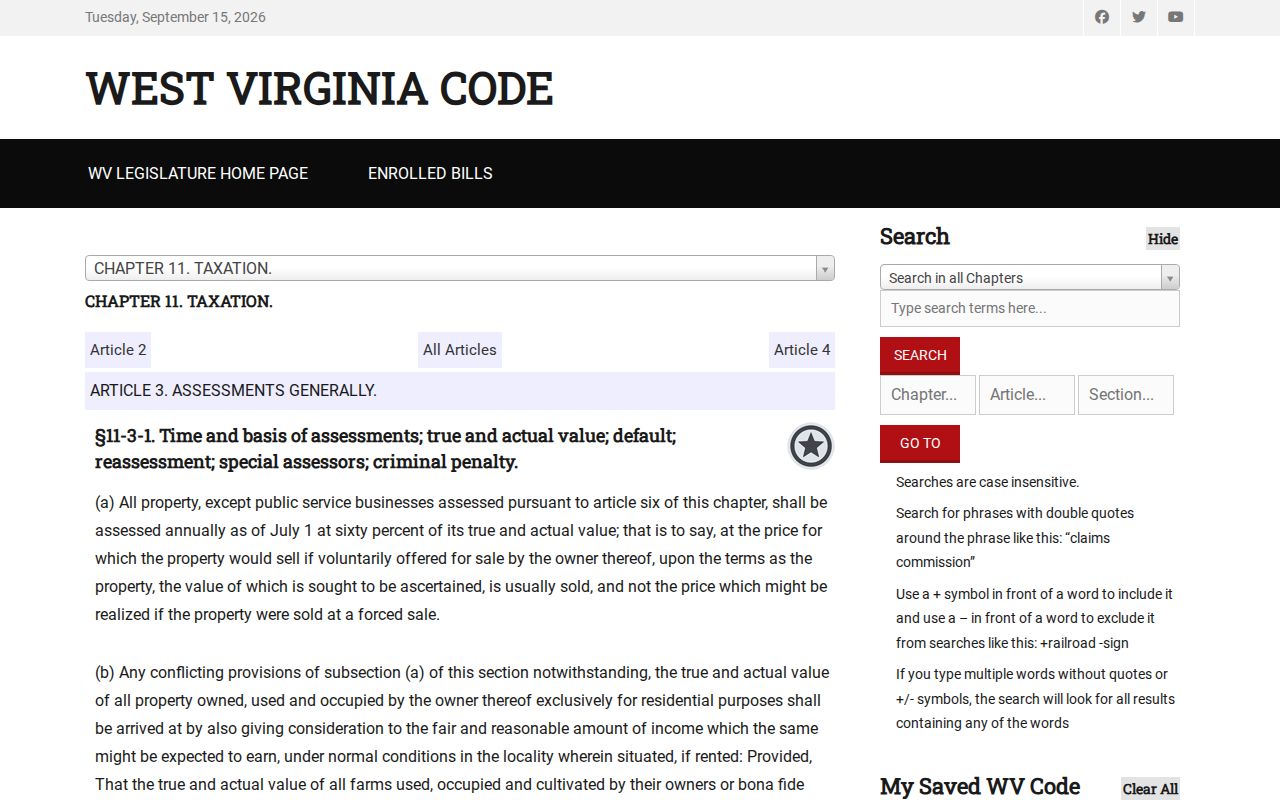
The rule defines a tax assessment level. It is not an appraisal for a sale.
Monroe County Installment Dates
County tax information puts real-estate bills in the mail in July. They cover a fiscal year running July 1 through June 30. Pay in person, by mail, or through the online Tax Inquiry route. Cash, credit, and personal check are the listed forms of payment. Keep a receipt or confirmation. An assessment page and a paid-bill record answer different questions.
| Installment | Payable | Delinquent after | Office follow-up |
|---|---|---|---|
| First half | September 1 | October 1 | Confirm payment with Sheriff/Tax Office |
| Second half | March 1 | April 1 | Ask about receipt and current status |
These dates come from the county's own material. Confirm the bill year and current instructions with the tax office. An old notice or another year's search result can mislead.
Looking Up a Monroe County Tax Bill
Start with the address or parcel ID to find the tax account. Check the exact tax year before reading any amount as current. IAS requires a Tax Year selection and offers a jurisdiction control. The county tax office handles bills and payment methods. Land certified to the state has a separate route. The State Auditor's land collections system handles those tax bills. The full mechanics are on the Monroe County property search page.
- Locate the parcel in IAS and write down the parcel ID, tax year, and jurisdiction.
- Use the county tax office’s inquiry route to check the bill amount, receipt, installment, and payment status.
- Ask the Assessor which classification and exemption fields are attached to that parcel and year.
- If the land is certified to the state, search Land and County Collections by year and county, then use a parcel or certificate clue.
- Assessed value
- The value used as the tax base under state rules.
- Levy rate
- The rate applied by the county and other taxing bodies.
- Tax bill
- The amount calculated for a tax year, with payment dates.
- Tax delinquency
- An unpaid amount after the applicable due date; confirm with the collector.
Appealing a Monroe County Assessment
West Virginia gives every county a Board of Equalization and Review for assessment appeals. Monroe County publishes no online meeting calendar, local appeal form, or filing cutoff. Assume no specific deadline. Contact the assessor or county commission before the review period begins. Ask how to request review and what evidence is accepted. Ask which notice date controls. Keep your file tight. Gather the assessment notice, property description, photographs, recent comparable sales, and any correction records together.
Check the local calendar. Monroe County’s specific appeal dates and form were not located in the inspected sources. Confirm the current schedule with the Assessor before relying on a statewide outline.
State Land Collections for Monroe
Monroe County land and tax-sale status lives in the State Auditor's Land and County Collections portal, not in the routine county tax bill. The search starts simple. Tax Year and County are required. From there, optional fields include District, Map, Parcel, Sub Parcel, Certificate Number, Taxpayer Name, Purchaser Name, Bidder ID, Description, Ticket Number, Account Number, and Status. Redemption material sits nearby. The page links to redemption FAQs, a Notice to Redeem, and an Affidavit of Exhaustion for Purchaser.
Confirm the current year and status on the live system at the State Auditor collection search. A hit raises follow-up questions. The Sheriff's Tax Office can explain the payment record. The State Auditor handles certification and redemption steps for a Monroe County tax sale. A sale lead involves notices, a purchaser, and later action, so treat it as unfinished until the current land record and any redemption or release are reviewed.
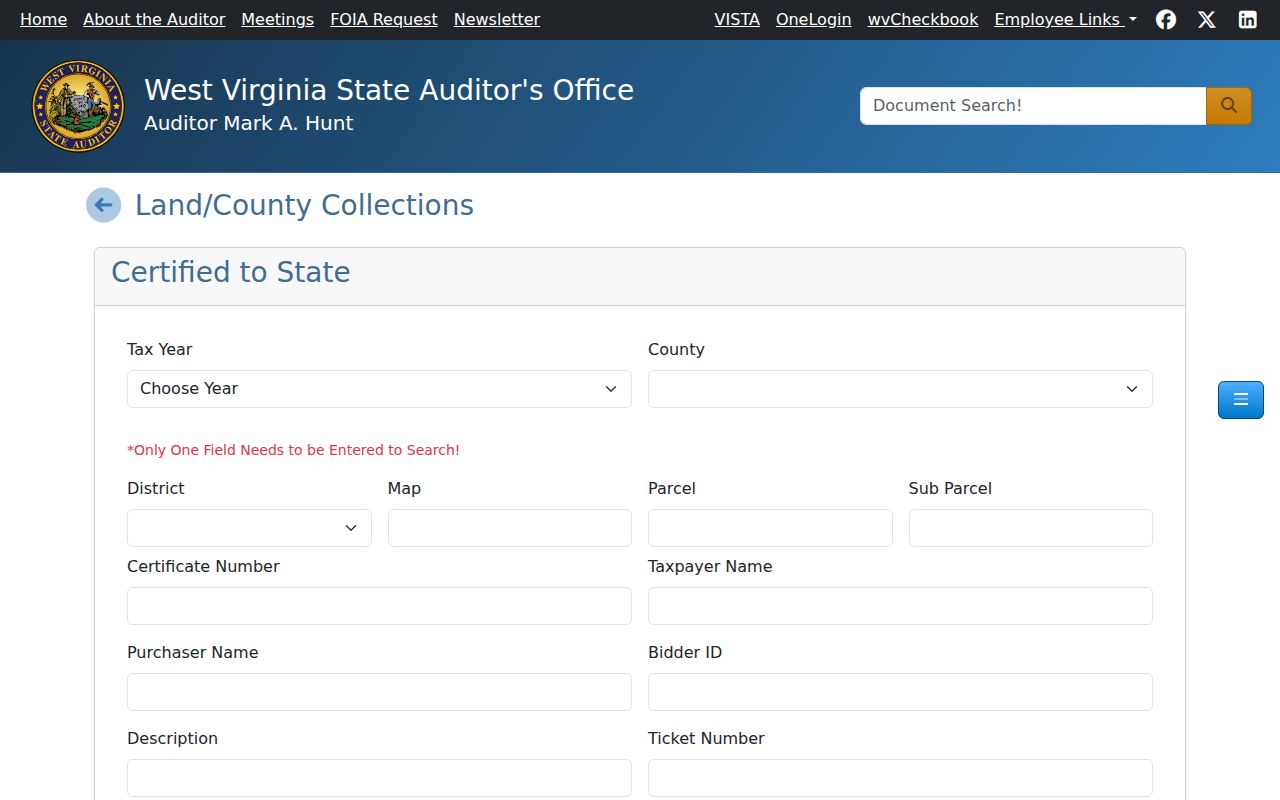
The form supports certificate and purchaser searches as well as parcel-based discovery.
Monroe County Exemptions Need a Card Check
The Assessor's online filing page handles personal-property filing, not exemption lookups. That distinction trips people up. County materials link an assessment form. Its exemption checkboxes and instructions are incomplete. Ask the Assessor which exemption applies. Ask what proof is needed. Ask whether the result changes assessed value, taxable value, or both. Classification and levy rates can shift a Monroe County tax bill. That holds true even when the market estimate holds steady.
Paperwork matters here. Keep the filed form. Keep any supporting document, the assessment year, and the office's reply. If an exemption is absent, ask about correction or review before the local schedule closes. The assessor's page shows filing and contact details. A dynamic days-left counter is no firm deadline. For current office material, the county Assessor page is the link.
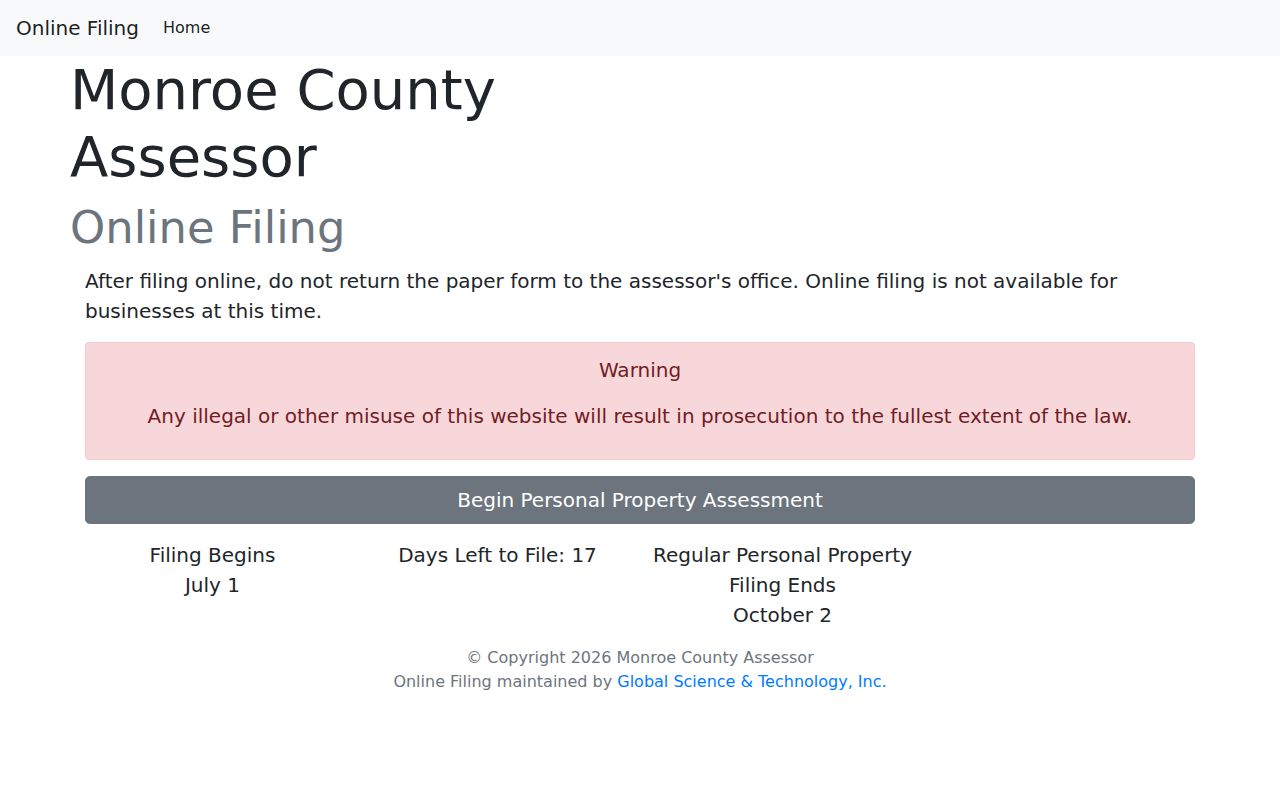
Confirm exemption rules and filing dates directly with the county office.
Tax Value Versus Monroe Sale Price
A tax bill and a deed answer different questions. The bill rests on assessed value and local levies, while the deed may carry transfer-stamp or consideration information about one transaction. Deed amounts mislead. The figure can be nominal or exempt. It can also mark a family transfer, a gift, or a correction rather than a market estimate. The assessed amount is generally 60 percent of true and actual value. That is not what a buyer pays. See Monroe County property value for what these figures mean.
Retain the deed type, date, parties, and legal description. The Monroe County tax record and the recorded instrument can disagree because they serve different purposes or cover different dates, so compare only arm's-length transactions with similar land, improvements, and conditions.
When Monroe County Tax Data Is Missing
Missing Monroe County tax data has fixes. The IAS portal posts maintenance notices and a partial-data-refresh date of September 12, 2026. That is the system's own notice. It signals a hiccup, not a permanent outage. Call the Assessor for a property card or year history. The Sheriff's Tax Office covers bill, payment, and delinquency details.
Directories list tax staff numbers. Ask which person handles the specific account. Older tax records or an unposted parcel card call for a FOIA request to the custodian, including district, map, parcel, situs address, tax year, owner name if known, and the exact fields needed. West Virginia Code §29B-1-3 permits actual reproduction costs but bars charges for search or retrieval labor, with a response due no later than five days excluding weekends and legal holidays. Ask for an electronic copy when the record exists in that form.