
Which Values Appear in Monroe County Records?
Value means different things in Monroe County records. The assessor's figure exists to administer property taxes. A recorded deed documents a transfer and the consideration stated in that instrument. An appraisal, done separately, estimates value for one assignment. These numbers can disagree without any record being wrong. Before any Monroe County property value lookup, pin down the source, the tax year, and whether the question is an assessment, a transaction, or a present-day opinion of market value. The label tells you which figure you are reading.
| Figure | Meaning | Record to consult |
|---|---|---|
| Assessed value | Taxable assessment under West Virginia's assessment rules | Assessor / State Auditor real-property search |
| True and actual value | Full-value basis referenced by state assessment law | Assessment record and governing law |
| Sale consideration | Amount or consideration recited for a particular transfer, subject to the deed's terms | Recorded deed and transfer records |
| Market appraisal | An appraiser's opinion for a defined date and purpose | Licensed appraiser's report; not supplied by the tax roll |
Not every parcel result shows the same value details. Monroe County publishes no parcel card with a fixed set of line-item value fields. So a building breakdown or a prior sale figure may not appear. Read the labels and the year on each source. For a transaction, use the deed record and its stated terms rather than treating an assessment as a stand-in sale price.
West Virginia's 60 Percent Assessment Rule
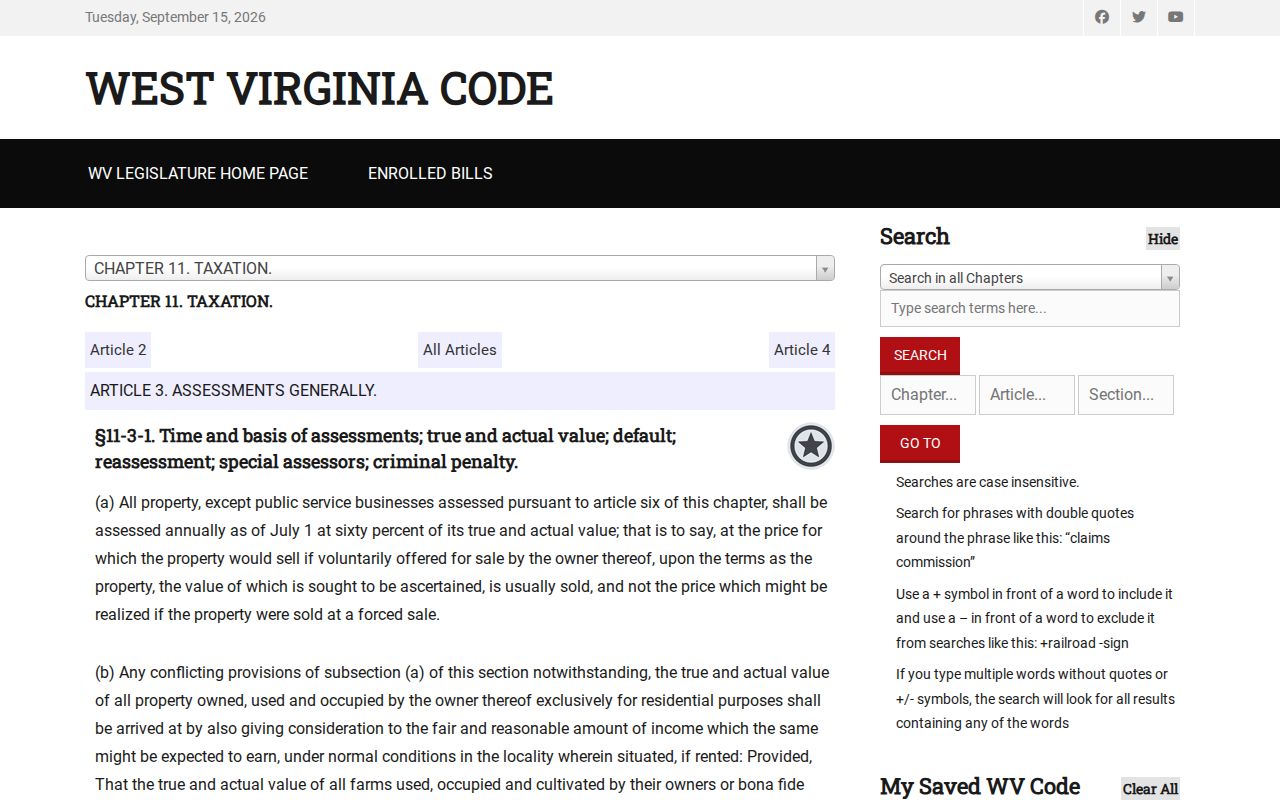
West Virginia taxes property at a fraction of its full worth. The statute puts that fraction at 60 percent. Under West Virginia Code §11-3-1, taxable property is assessed at 60 percent of its true and actual value, subject to the statute's terms and other applicable law. That ratio explains the gap between an assessed figure and a full-value estimate. It is not a discount on a sale price. The assessor's number is no offer or appraisal. It is not a guaranteed market estimate. Read it with its tax year and property classification.
West Virginia Code §11-3-1 states the 60 percent rule, and the image below shows the statutory text relevant to Monroe County property assessments.
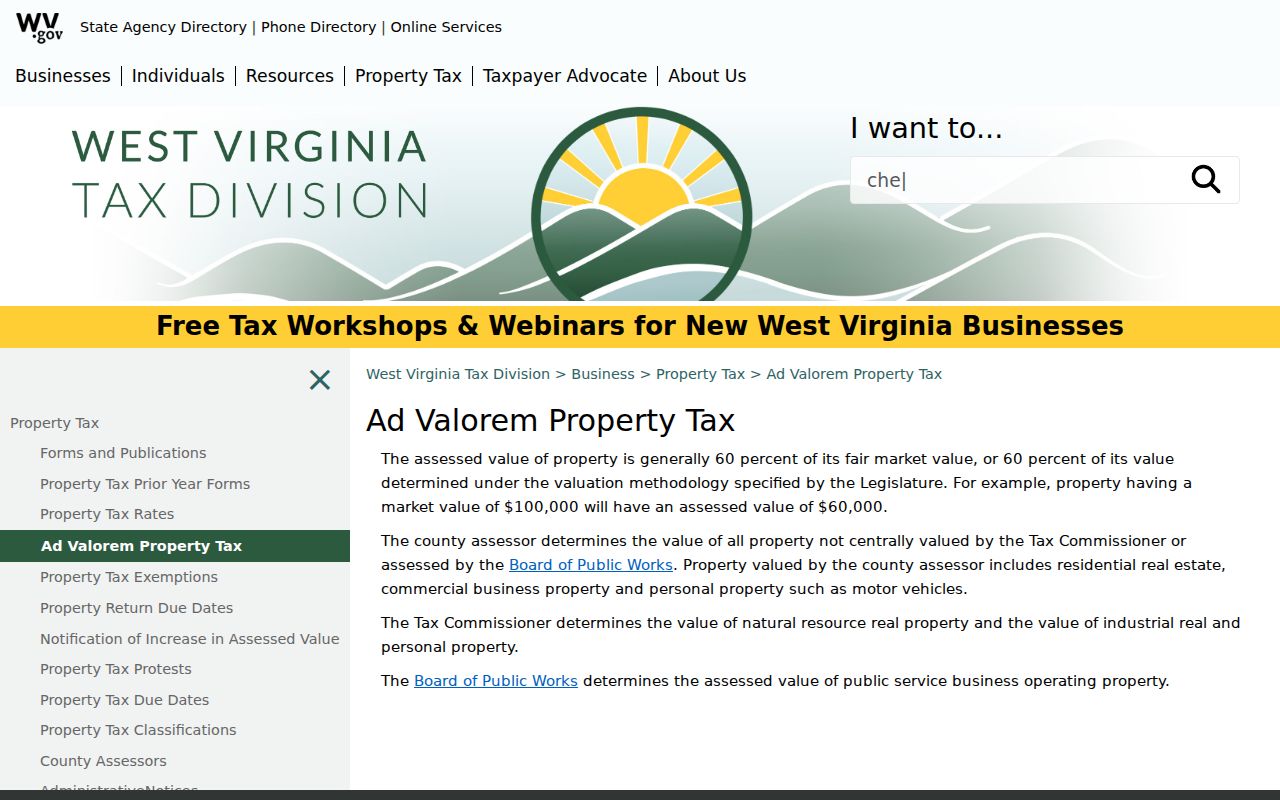
The State Tax Department separates two ideas. True and actual value reflects market worth. The assessed amount is what enters the tax calculation. The West Virginia Tax Department explains ad valorem property assessment, and its statewide description gives useful context for reading the ratio and value terms on any Monroe County parcel.
Read the Assessment Year and July 1 Date
July 1 anchors the whole assessment cycle. West Virginia property is valued annually as of that date. It is not the day an online record was last refreshed. It is not the date a bill was printed. It is not a forecast of the next sale. Improvements, ownership changes, and other reportable events can move the roll on a calendar-month basis under state rules. The county publishes no guaranteed posting lag. A value online may still be the official assessment for its tax year, even when the page itself was updated more recently.
Write down the tax year first. Then compare Monroe County property value entries across years. A shift might reflect new property characteristics, a reappraisal, a classification or exemption change, or a correction; the amount alone never names the reason. When a year-to-year change needs explaining, ask the Assessor which property record and valuation basis apply.
How to Look Up a Monroe County Property Value
The statewide public search route is the State Auditor's real-property form. Monroe County assessment records appear there. It is separate from the Assessor's online personal-property filing portal. Use a stable parcel identifier when you can. Address and owner searches can return more than one result. They can also miss an entry formatted differently. A parcel number is the safer handle for any Monroe County property value lookup.
- Open the State Auditor's real-property form and select Monroe County with the required tax year.
- Search by Parcel ID or try the address fields: parcel address number, street, and ZIP code. Owner Name1 and Owner Name2 are additional search fields.
- Use district, map, parcel, and subparcel details to distinguish similar records; note any book/page reference shown.
- Record the value labels and tax year exactly as displayed. If the question concerns a sale, locate the recorded deed through the County Clerk separately.
- For a valuation question, contact the Monroe County Assessor and ask which property characteristics and assessment record were used.
The public form offers real controls, not just a blank box. You can sort by parcel, state class, and page. Tax-year and jurisdiction selectors narrow the results further. The system has shown maintenance and partial-refresh notices before. An incomplete result may reflect availability, not a missing record. Retry later or call the Assessor, and see the Monroe County property search guide for field-by-field search notes.
Compare Assessment Figures With Deed History
An old deed can explain a property's history. Yet it is not automatically a comparable sale. Every deed differs. Transaction dates, rights transferred, acreage, improvements, financing, and family circumstances all shape what the paper means. The stated consideration may need context. An assessment may reflect a different valuation date altogether. Before relying on a comparison, check the deed itself, the assessed parcel, and the time period. Also confirm whether the land and improvements match the property in question.
The County Clerk holds deeds and related instruments. Monroe County publishes no online deed-index portal, so requests go through the Clerk directly. Bring a grantor or grantee name. A recording reference, an approximate date, or a legal description also works. That gives the Clerk a route into the index. A deed proves what the instrument says, nothing more. It is not independent evidence of today's market value. The deed records page covers copy requests and historic sources.
No Monroe County Market Trend Was Verified
Monroe County offers a public assessment search, statewide valuation rules, and tax-office references. It publishes no parcel card, local sales database, or town-by-town price trend. That limit matters. Attaching a county median, a neighborhood appreciation rate, or a recent-sale comparison to one property would mislead without a reliable source. The same goes for a matching time period. A value lookup shows what the selected assessment record reports. It cannot fill in a missing local market study.
For an informal comparison, pull verified deeds for similar properties. Read each legal description closely. Note the transfer date, acreage, improvements, and deed type. A family conveyance, correction, exempt transfer, or partial-tract sale rarely suits a market comparison. For a current valuation conclusion, hire an appraiser and state the intended date and purpose. Keep the assessor's tax year and the deed date separate. Blending unlike figures turns neither into a sound Monroe County property value opinion. Each date serves a different role in the analysis.
What an Assessor's Value Cannot Tell You
An assessment exists for public revenue administration. It is not an appraisal. It is also not a structural inspection, title opinion, boundary survey, or guaranteed asking price. The roll cannot explain by itself why a particular owner received a value. It also cannot say whether a recent physical change has been folded in. The online form exposes search fields and records. It does not replace the Assessor's underlying workfile or a professional review of the property.
Assessment is not market price. A Monroe County property value on the tax roll should not be represented as the amount the parcel will sell for. For a sale, lending, estate, or other decision requiring a current opinion, consult a qualified appraiser and confirm the intended valuation date and use.
Questions About a Monroe County Assessment
A record mismatch, missing improvement, owner-name issue, or value question belongs with the Assessor's office. Have the parcel identifier and tax year ready. The county directory lists the Assessor in Union. The county Assessor page posts hours and telephone information. Ask whether the displayed value is the current taxable assessment. Ask which property classification applies and what documentation a review requires. Monroe County publishes no appeal calendar here. Confirm deadlines and procedure with the Assessor or the appropriate West Virginia office.
Keep the assessment question apart from the tax-bill question. A tax amount also depends on rates, exemptions, payment status, and levy details. For billing dates and collections, use the Monroe County property tax records guide. For a parcel or owner of record, use the public real-property lookup.