
How to Find a Monroe County Owner
An owner search starts with an address, a parcel ID, or a name. It works best with any one of these in hand. The State Auditor's IAS real-property form will pull up the assessment account. Owner Name 1 and Owner Name 2 are the visible inputs. The portal does not always display the owner label on the result card. So treat whatever returns as the assessor's administrative name. Then confirm any recent transfer with the County Clerk's latest deed.
Trusts, LLCs, and estates need their exact legal name kept intact. A Secretary of State filing can surface an entity record or its registered agent. That filing does not establish ownership of a parcel. Probate files explain a fiduciary's name. The deed or the court order supplies the actual evidence of a land transfer.
- Search the address or parcel in IAS and note the tax year, jurisdiction, and owner-name fields.
- Ask the County Clerk for the newest recorded deed and compare grantor, grantee, date, and legal description.
- If the grantee is an entity, check the official Secretary of State business filing without treating its agent as the landowner.
- If an estate or fiduciary appears, check probate and any later fiduciary deed before assuming distribution is complete.
Monroe County Owner Search Fields
The IAS form offers two separate owner-name fields. It does not explain how partial names match or label results. Search the name as written first. Try a variant only for a clear reason, such as a middle initial, punctuation, a married name, or an old spelling. The Assessor can confirm which returned field is the current owner-of-record entry.
The public IAS form carries the owner fields and the parcel search. The image shows the search controls only. It is not a parcel card.
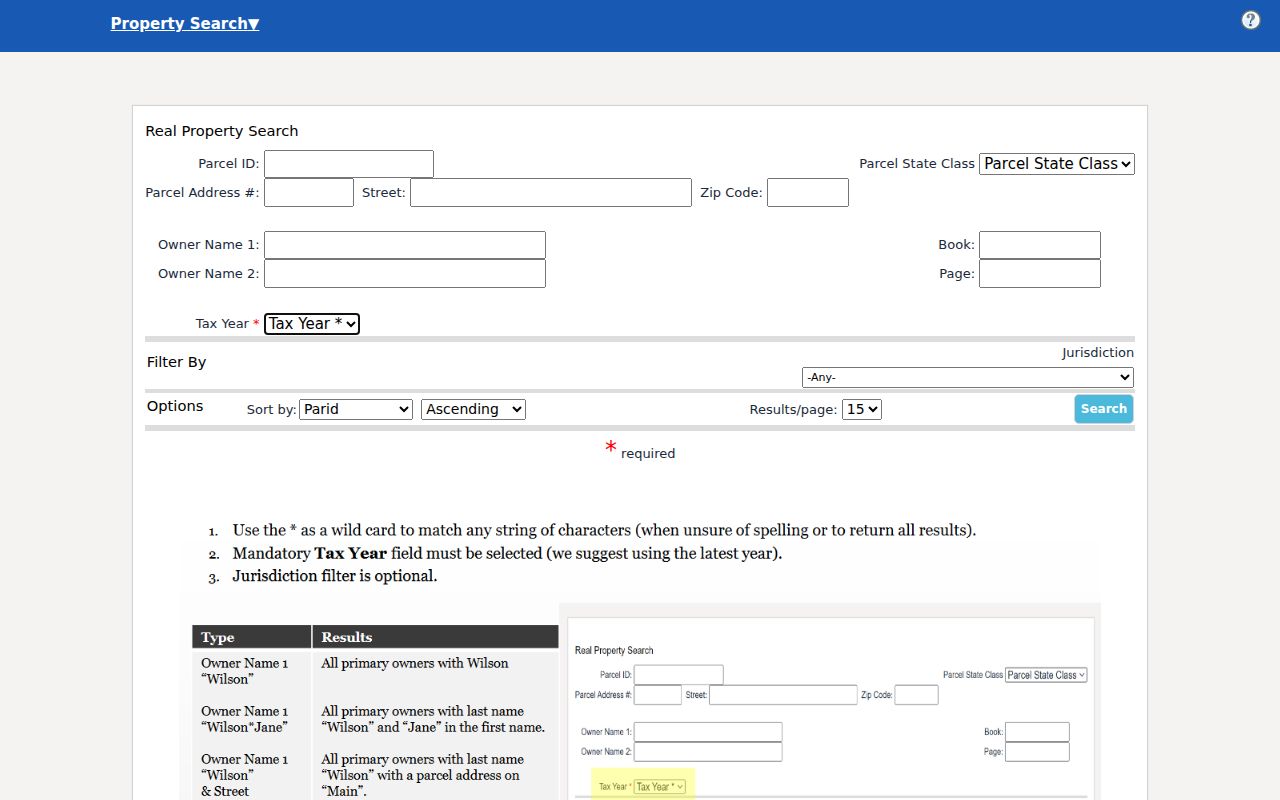
The form finds an account, not a confirmed owner label.
Where Monroe County Names Appear
Several public records can tie a name to a parcel. Each has its own job. Pick the row that matches your question, then confirm the name against a recorded conveyance whenever ownership matters.
| Source | Owner Info It Gives | Access |
|---|---|---|
| Assessor / IAS roll | Owner Name 1 and 2 search inputs; result label was not verified | Public State Auditor real-property form |
| County Clerk land record | Grantee and transfer stated in the recorded deed | Counter, phone, or written request; no public deed index located |
| Secretary of State business search | Entity filing, agent/officer fields, registered address | Public entity search; does not prove parcel title |
| Probate / court record | Decedent, fiduciary, order, or party role | County clerk, WVPASS, or circuit-clerk file request |
| Mapping / parcel contact | Working map or address lead, if held | County directory contact; public viewer not located |
None of these sources identify occupants. An owner may live elsewhere, hold title through an entity, or use a mailing address apart from the situs. A docket names case parties. It does not prove ownership, so label the record source beside every name to keep the roles straight.
Limits of a Monroe County Owner Lookup
A Monroe County name search has firm limits. It does not say who lives at a property. It does not show whether every legal interest is recorded, or whether title is clear. The assessor roll serves assessment and billing. The deed is a recorded conveyance. Probate can show authority for a later transfer. A docket shows a claim or order. These sources can lag, or they may use different legal names. For current owner-of-record detail, compare the latest deed with the tax roll. Use the Monroe County current owner page.
Lawful use. Owner names are for property research, due diligence, family history, and civic transparency. Do not use a Monroe County owner lookup to stalk, threaten, intimidate, or harass anyone.
Confirm a Monroe County Deed
The strongest confirmation of a finished transfer is the latest recorded deed. A name in a general database is not enough. Ask the County Clerk for the instrument. It names the current grantee. Compare the recording date, every grantor and grantee, and the vesting language. Check the legal description and the book and page reference too. A deed may list a spouse, trustee, beneficiary, or fiduciary. Record each party's role. Never treat the first printed name as the sole owner.
The clerk's public page lists deeds among the records kept locally. The office publishes no online grantor-grantee index. An instrument may cite a prior deed. Follow that reference when a name search misses it. A correction, quitclaim, or probate deed may not reflect a typical market sale. A transfer between relatives may not either. The Monroe County Clerk's page gives the contact route for an official deed request.
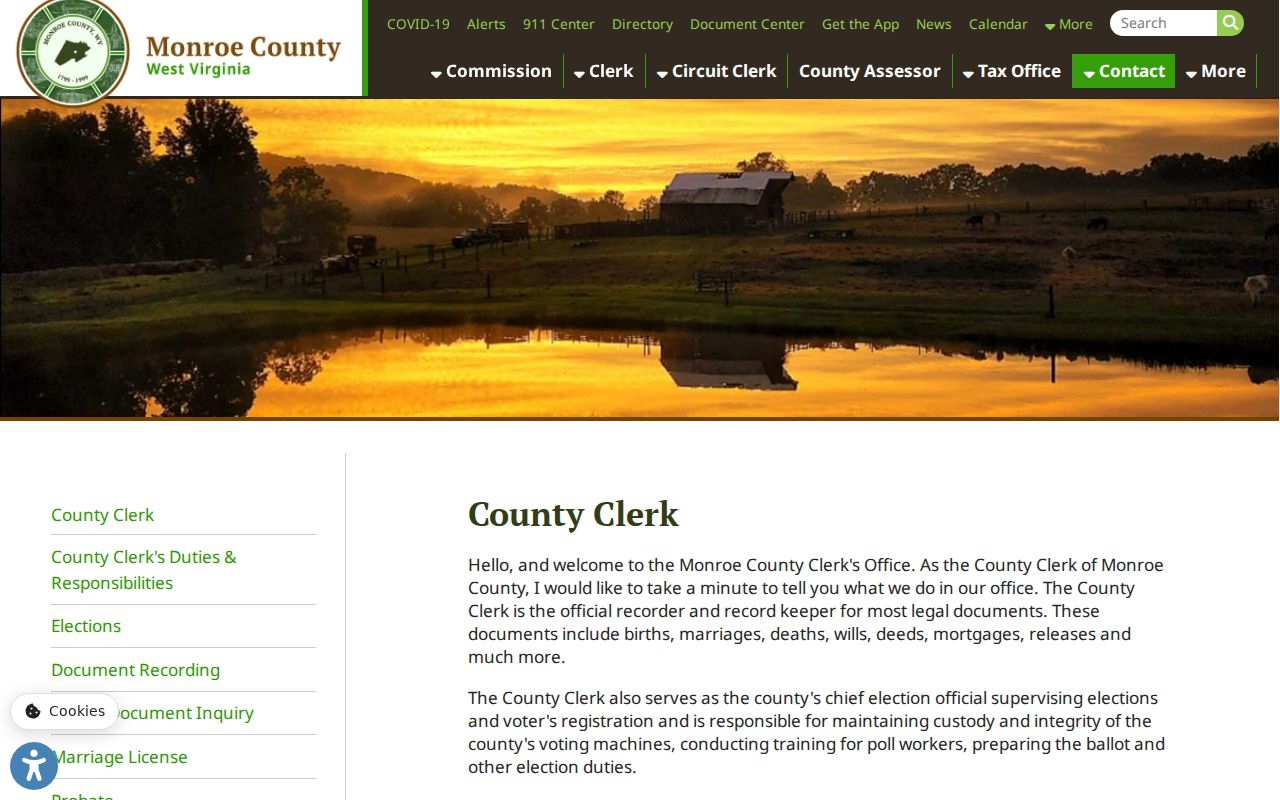
The clerk can direct a request to the right book, copy, or certified record.
Read Each Owner's Role in a Monroe County Deed
A deed can name several grantors or grantees. Marital, trustee, executor, or administrator language often appears beside each name. Those words describe the role in that one instrument. They do not list every interest holder. A co-owner may convey only the share described. A fiduciary acts under authority stated in the deed or probate record. Copy every name and capacity. Ask the Clerk with those details to locate the instrument.
For an entity, check the Secretary of State spelling first. Then see whether that entity appears as grantee in the county deed. For a deceased owner, follow the probate file to the fiduciary transfer. A deed from heirs may also appear. The two owner-name fields on the assessor's form help the search. But the form does not show which field appears on a result card. Nor does it show whether a result reflects a sole owner. Keep the record source beside every ownership conclusion.
When an Entity Owns Monroe Land
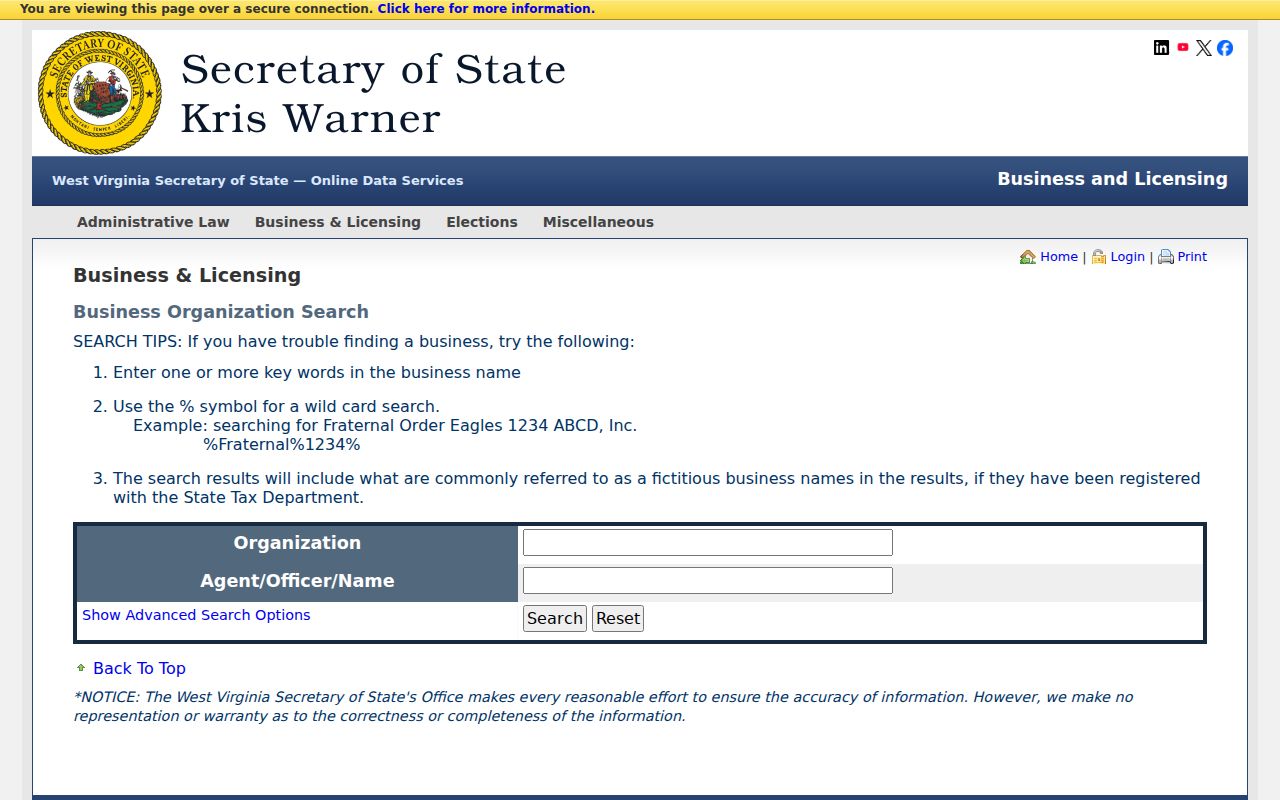
A Monroe County deed sometimes names an LLC or corporation. Sometimes it names another organization rather than a person. Copy the entity name exactly as the deed spells it. Then take that name to the Secretary of State's organization search. The search offers fields for Organization and Agent/Officer/Name. The percent sign works as a wildcard. Advanced options add RecordID and address filters. Results can also surface fictitious business names filed with the State Tax Department.
Remember what a result is. It is a state entity filing, nothing more. It does not prove the business holds a specific Monroe parcel. A registered agent, likewise, is a service contact rather than the person controlling the land. The Secretary of State warns it makes only a reasonable effort. It does not warrant that every detail is complete. Confirm the entity as grantee in the recorded deed. Then lean on the county deed and assessor records for the parcel connection. The West Virginia business search is the official entity lookup.
Match an organization name to a deed first. Only then tie it to a parcel. The West Virginia licensing search offers name, city, state, ID, type, status, and county filters for covered license records.
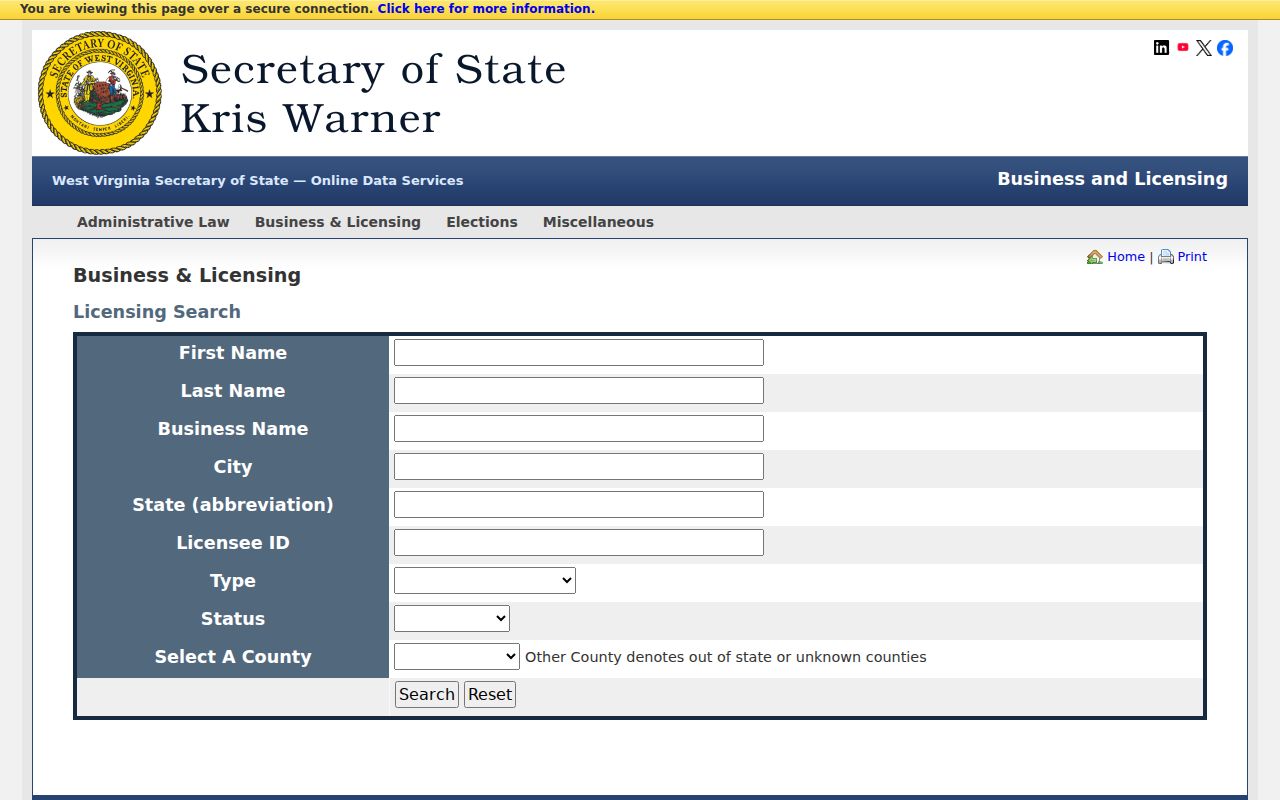
A license entry can identify a regulated person or business. Still, only the land record connects a grantee to a Monroe County parcel.
Estates and Monroe County Owner Names
Estates explain many puzzling owner names in Monroe County. A decedent may stay on an assessor account while the estate is open or before the tax roll catches up. The Monroe County Clerk handles wills and probate. A fiduciary deed, an heirship affidavit, a court order, or a deed from heirs may explain the name that appears later.
Work in order. Start with the probate file. Identify the executor or administrator. Then check the land record for a conveyance out of the estate. An estate name on the tax roll does not prove the property was distributed.
Vital records follow separate access rules. West Virginia generally opens birth records after 100 years and death, marriage, divorce, and annulment records after 50 years, with protected information still restricted. Certified copies today require eligibility and identification. A vital certificate can support a timeline, but it does not convey land.
Note: The posted Monroe marriage-copy route differs from the state certificate process, so confirm the proper custodian and fee before ordering.
Mailing Address and Protected Records
The IAS form offers address, street, and ZIP fields, yet its parcel card does not clearly label which line is the mailing address and which is the situs. The distinction matters. A mailing address is where the tax bill goes. The situs address is the physical property. The two often differ. A public owner record may also omit an address or substitute one for a protected participant. Never copy a private address into a public post, and never treat a mailing line as proof of where someone lives.
West Virginia's Address Confidentiality Program serves eligible survivors of domestic violence, sexual assault, stalking, or human trafficking who have relocated or plan to relocate. An approved victim-service assistant helps with enrollment. The Secretary of State can then act as a mail and legal-document agent. Enrollment lasts four years. The program does not erase every prior public record. The official ACP page explains the substitute-address program.
Protected-address rules help explain why a public record may not show a person's current location.