
The Monroe County Owner-of-Record Card
The county's IAS search form offers Owner Name 1 and Owner Name 2 as inputs, but the full parcel card is not openly reachable online. That means the result labels for owner, situs, last sale, and deed reference stay unknown until you see a live result. Treat this table as a checklist of fields to request from the Assessor. Keep the tax year and parcel number attached to every item.
| Owner name | Owner Name 1 and 2 are visible search inputs; result label not confirmed |
|---|---|
| Vesting / party role | Read the latest deed for grantee, co-owner, trustee, or fiduciary wording |
| Mailing address | Result field was not visible; ask whether tax correspondence address is shown |
| Situs address | Search form accepts Parcel Address #, Street, and ZIP |
| Deed reference | Book and Page search fields are visible; result reference not inspected |
| Current date / year | Tax Year is required; deed date and roll update date need confirmation |
A tax record names the owner or tax contact, not the resident. The mailing address may sit off parcel. An owner field can also go stale after a closing. Never infer occupancy from a name or mailing line.
Monroe County Owner Field and Update Rule
On the IAS search screen, the owner inputs are simply Owner Name 1 and Owner Name 2. The results do not label the party as Owner, Taxpayer, or Owner of Record. Ask the Assessor which output field carries the current administrative name and when it last changed. That detail matters. A deed may list two people, a trust, an estate, or a business entity. The roll needs a field that matches what was recorded. For Monroe County parcel record questions, ask the Assessor's office. It can explain how the names flow from deed records into the tax roll.
West Virginia assessment law keeps the roll annual, dated to July 1. Changes in description, status, classification, and value must be entered no later than the calendar month after the change. Monroe County posts no fixed closing-to-roll delay. No deed is guaranteed a spot in IAS by any particular date. When timing matters, compare the newest recorded deed against the current tax-year roll. See which name the parcel carries. That comparison is the fastest way to spot a lag between the recorder and the assessor.
West Virginia Code §11-3-1 sets out the annual assessment requirement. The label shown on the local portal result remains a point worth confirming. Ask the office that maintains it.
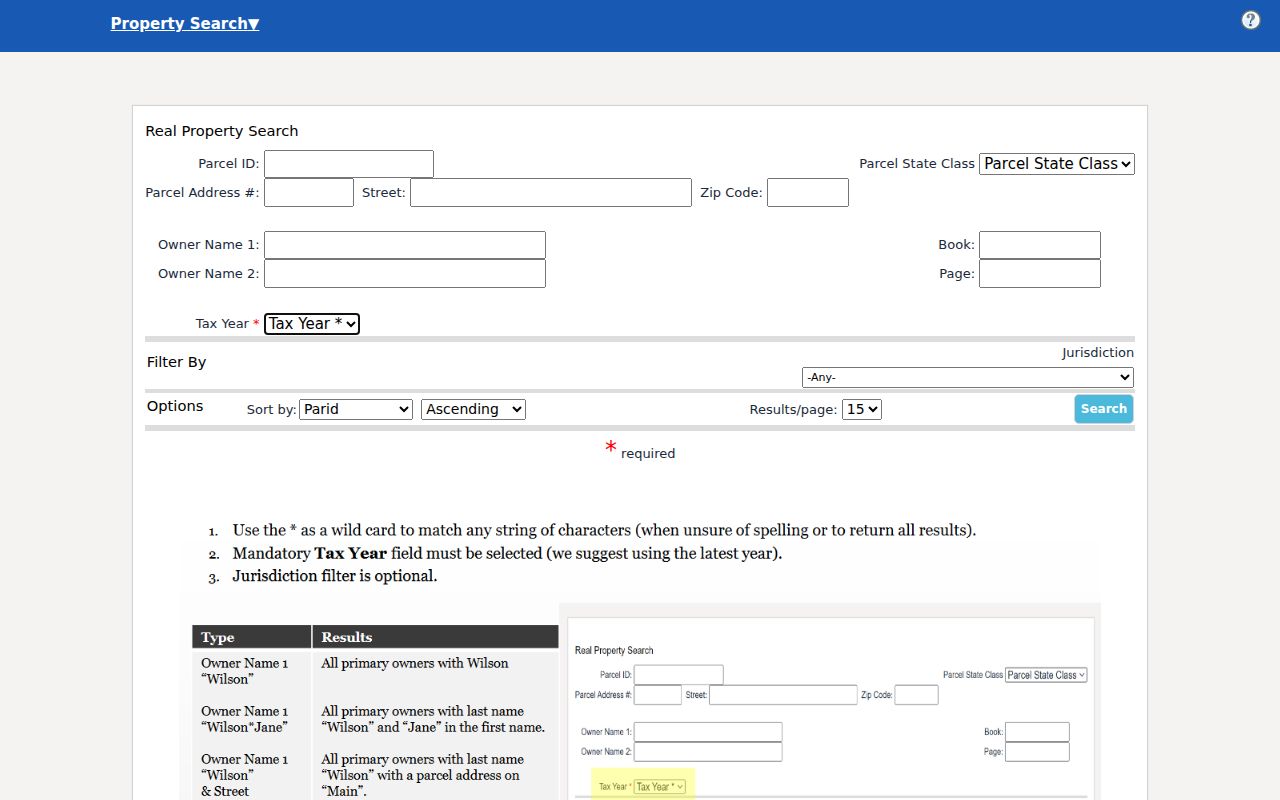
The screenshot shows name inputs, not the current owner result or parcel card.
Confirm the Current Monroe County Owner
Start with the roll to find the present tax account. Then confirm the newest transfer in the land record. Monroe County publishes no online grantor-grantee index. The County Clerk page is the official route for in-person, phone, or written requests. Give the parties and the location. Add a likely recording date, and the book and page if you have them. Read all the grantee language, not just the first name.
- Search IAS for the parcel and record tax year, jurisdiction, and both owner-name fields.
- Ask the Clerk for the latest deed; compare its grantee, legal description, recording date, and cited prior book/page.
- If the grantee is an entity or estate, verify the filing or probate role without treating an agent as the landowner.
- Ask the Assessor whether the roll has been updated and where mailing and situs addresses are displayed.
- Owner of record
- The party named in an assessment account, subject to its update date.
- Grantee
- The party receiving an interest in a recorded deed.
- Vesting
- The deed language describing how an interest is held.
Contacting a Monroe County Owner
A mailing address on a tax record is not always where the owner lives. It may be a separate postal address, a business, or a substitute address for someone in the state Address Confidentiality Program. Nor does the owner record prove who occupies the land. If a property matter requires contact, use a lawful and respectful channel. Avoid republishing personal details.
Lawful use. Use Monroe County owner information for property diligence or a legitimate land matter. Do not use it to stalk, threaten, or harass a person.
Mailing and Situs Addresses in Monroe
The IAS form labels its location controls Parcel Address #, Street, and Zip Code. Ask the Assessor whether a mailing address exists for a given account. Ask how it differs from the situs. A rural route, a post-office community, or a ZIP can cross town or county lines. The postal city alone never settles taxing jurisdiction.
Alderson shows why this matters. The Greenbrier River splits the town between Monroe and Greenbrier counties. Confirm the county before ordering a deed or tax record. For other rural addresses, trust the parcel ID returned by the assessment search. Trust the jurisdiction too, rather than the place name.
Entity or Estate on the Current Roll
A company or trust can hold title in Monroe County. A person may still serve as manager, beneficiary, or registered agent. West Virginia's business search surfaces an organization filing. But only a County Clerk deed links that filing to land. Preserve the exact legal name and read the instrument's capacity terms.
If a decedent still appears on the tax roll, review the Monroe probate file. Review any later fiduciary deed as well. The state's one-month update rule is not a county-specific promise. Ask whether a correction is pending and which deed backs the current account. Describe present ownership with both the roll date and the latest deed date.
The West Virginia Secretary of State business search is a solid starting point for entity details. For assessment and record questions, use the Monroe County Assessor page.
The Assessor office can confirm the account’s displayed owner field and update date.
Monroe County Current Owner Timing
Monroe County publishes no fixed lag between a closing and the next tax roll. The IAS property site occasionally posts maintenance notices and partial refreshes. So the online name can trail the courthouse paperwork. A freshly recorded deed is often the better clue to the current owner of record. Ask the County Clerk for the latest conveyance on the parcel. Then ask the Assessor whether the account has been updated. Do that before treating any name as current.
Office hours differ slightly by office. The Clerk page lists weekdays from 8:30 a.m. to 4:30 p.m. with a lunch closure. The Assessor page lists 8:30 a.m. to 4:20 p.m. State profiles have shown differing courthouse street addresses, so call ahead before traveling. The published county office pages carry the reliable contact information.
The broader route for identifying a person behind a parcel is on the Monroe County ownership lookup page. Check the Monroe County Assessor contact page before requesting a current parcel card.
Owner of Record Does Not Mean Occupant
The current owner field answers an administrative question. It names whoever the assessment account ties to a parcel for a given roll. That is all. The field does not prove who lives at the situs. It does not prove who manages the land or receives mail there. It does not even prove who holds possession under a lease or family arrangement. A deed may also name more than one grantee. Or it may describe a trust or a fiduciary role. Keep the name's source and effective date attached to any note or report. Never infer a resident's identity from a parcel entry alone.
West Virginia's Address Confidentiality Program can give an approved participant a substitute mailing address. This can appear in certain public records. A mismatch between the roll and a visible street address is not permission to hunt for a protected person's location. For a legitimate property matter, work through a lawful channel. You can also consult the records custodian or a qualified professional.
Verify the Owner Name Against the Exact Parcel
An owner search has traps. It can return several accounts for one person who owns multiple tracts. Two different people can share a name. Monroe County's IAS form splits entries into Owner Name 1 and Owner Name 2. Additional searches cover parcel, address, book/page, tax year, and jurisdiction. Compare the parcel ID and legal description. Do this before linking a name to a particular house or farm. Watch for splits, too. When a parcel divides, the owner on the parent account may differ from the owner on each child tract.
Deed records add a second layer. When a recorded deed grants an interest to multiple people, never collapse the result to the first owner field. Read the grantee language and any later deed, estate filing, or release that changes the interest. Ask the Assessor which tax-year account the displayed owner belongs to. Then ask the County Clerk to confirm the latest instrument. A current-owner conclusion should state its basis. It should cite the roll year or deed recording date rather than making an undated claim.