
Monroe County Deed Records and Transfers
Every Monroe County deed starts its public life at the County Clerk, the official recorder for Monroe County real-property instruments. The clerk takes in deeds, deeds of trust, plats, liens, lis pendens, judgments, leases, affidavits, and releases. Each type does different work. A deed conveys the grantor's interest as written. A mortgage or deed of trust instead secures an obligation. A release or satisfaction should be matched against the original filing before anyone assumes the debt is gone.
| Deed Type | What It Does | Common Use |
|---|---|---|
| Warranty deed | Conveys the described interest with the warranties stated in the document | Ordinary conveyance; read the exact covenants |
| Quitclaim deed | Conveys whatever interest the grantor holds without a promise of full title | Family transfer, correction, or title cleanup |
| Special warranty deed | States limited warranties as written in the instrument | Some property transfers |
| Trustee / fiduciary deed | Shows a transfer made under stated trust or estate authority | Trust administration or probate |
| Deed of trust / release | Records a security interest or its later release | Financing, payoff, or reconveyance |
Not every recorded paper transfers land. A deed and an encumbrance can sit in the same property history, yet they answer different questions. A mortgage never replaces the conveyance deed. An assignment merely changes who holds an interest. A recorded release or satisfaction marks a later action, so keep the instrument type beside every book and page reference rather than shrinking the chain to sale dates alone.
Monroe County Has No Located Web Index
Monroe County offers no official online grantor-grantee portal. No earliest online year exists to cite. One nearby tool invites confusion. The State Auditor's IAS property search is a real-property assessment lookup. It is not a deed index, so treat it accordingly. Begin instead at the Monroe County Clerk's official page. You can also call ahead of any trip or mail a written request. Include the grantor and the grantee. Add a likely recording date, the parcel location, and any prior book and page. Ask whether a public terminal is available. Staff may also search by party, instrument type, legal description, or parcel reference.
The courthouse sits at 350 Main Street in Union. The clerk keeps weekday hours of 8:30 a.m. to 4:30 p.m. and closes noon to 1 p.m. for lunch. A state profile once showed a different street number, so phone before any long drive. With no online index, the counter and the mail route carry the workload. A given book or image may be on site. It may instead sit in the archives, and staff can say which. The County Clerk's records page carries current hours and contact details.
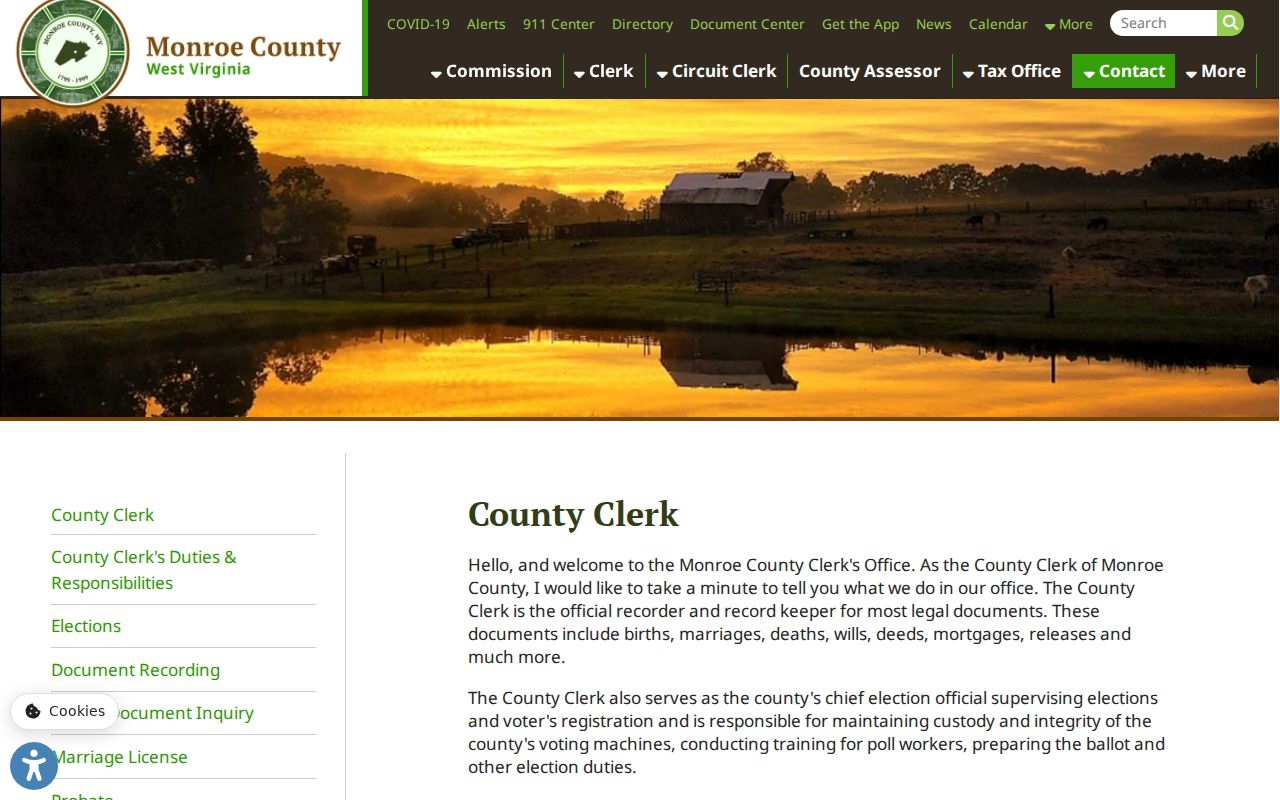
The clerk's page lists the records office only.
Walk Monroe County Grantor and Grantee Names
A grantor gives up an interest. A grantee receives it. To walk a Monroe County chain of title, start with the newest deed naming the current grantee, then search each earlier grantor as a grantee in still older instruments. The county's public index fields are not published online, so confirm the search method at the clerk's counter. Preserve every party role you find. A deed can name spouses, co-owners, trustees, beneficiaries, or an executor, and the first name on the page is not always the sole owner of record.
- Ask for the newest deed to the current grantee and copy its date, instrument type, book/page, and full legal description.
- List each grantor and search that party as a grantee in the preceding transfer.
- Follow the cited prior instrument even when a spelling variant or spouse name makes the index search unclear.
- When the book or index run ends, move to deed books, Archives microfilm, and other cataloged land records.
- Grantor
- The party conveying an interest in the instrument.
- Grantee
- The person or entity receiving the described interest.
- Chain of title
- The linked sequence of recorded transfers for the land.
- Book and page
- A volume and page citation; parcel ID follows a tax account instead.
Order a Monroe County Deed Copy
Ordering a copy from the clerk works best with specifics. Give the parties and the property location. Include an approximate recording date and the instrument type. Add any book, page, or document number. Say whether you want an ordinary or certified copy. The posted fee schedule dates from June 2021. Ordinary copies run $1.50 per page for the first two pages. After that, each additional page costs $1. A certified copy adds $2.50. Recording a deed carries a $27 minimum before other applicable charges. Those statutory columns are dense, and not every invoice will look alike. Verify the exact amount with the clerk.
Electronic copies are described as a reasonable fee not exceeding search and duplication cost. State your preferred format and payment method in writing. A court or title process may require certification. Ask whether the clerk can certify that particular record. Remember that a copy fee is not a recording fee. The transfer-stamp calculation depends on the instrument and its consideration.
Recorded, not guaranteed. A Monroe County deed establishes what that instrument says was recorded; it is not a title opinion. Unrecorded claims or later releases may change the full picture.
Historic Monroe County Deed Books
Monroe County's paper history runs deep. The West Virginia Archives guide lists a Monroe deed index covering 1776 through 1935, plus land books that include West Side volumes from 1863 to 1865. The 1776 start predates the county's 1799 formation and West Virginia statehood itself. That date marks an archival collection. It is not an online index cutoff. Confirm the exact reel or volume in the guide, then note the book and page you need for a certified record from the County Clerk.
Older instruments describe tracts by Virginia-era county, district, creek, ridge, road, acreage, survey, or adjoining owner. Search pre-1863 place names as Monroe County, Virginia. Preserve that historic wording exactly. Other archives hold Monroe material too. The WVU Archives finding aid lists a court-record collection, selected tax books, and deed survey book MONR 116. FamilySearch catalogs Monroe court records from 1789 to 1887, including an execution book from 1813 to 1820. The State Archives microfilm guide holds the historic index and land-book leads.
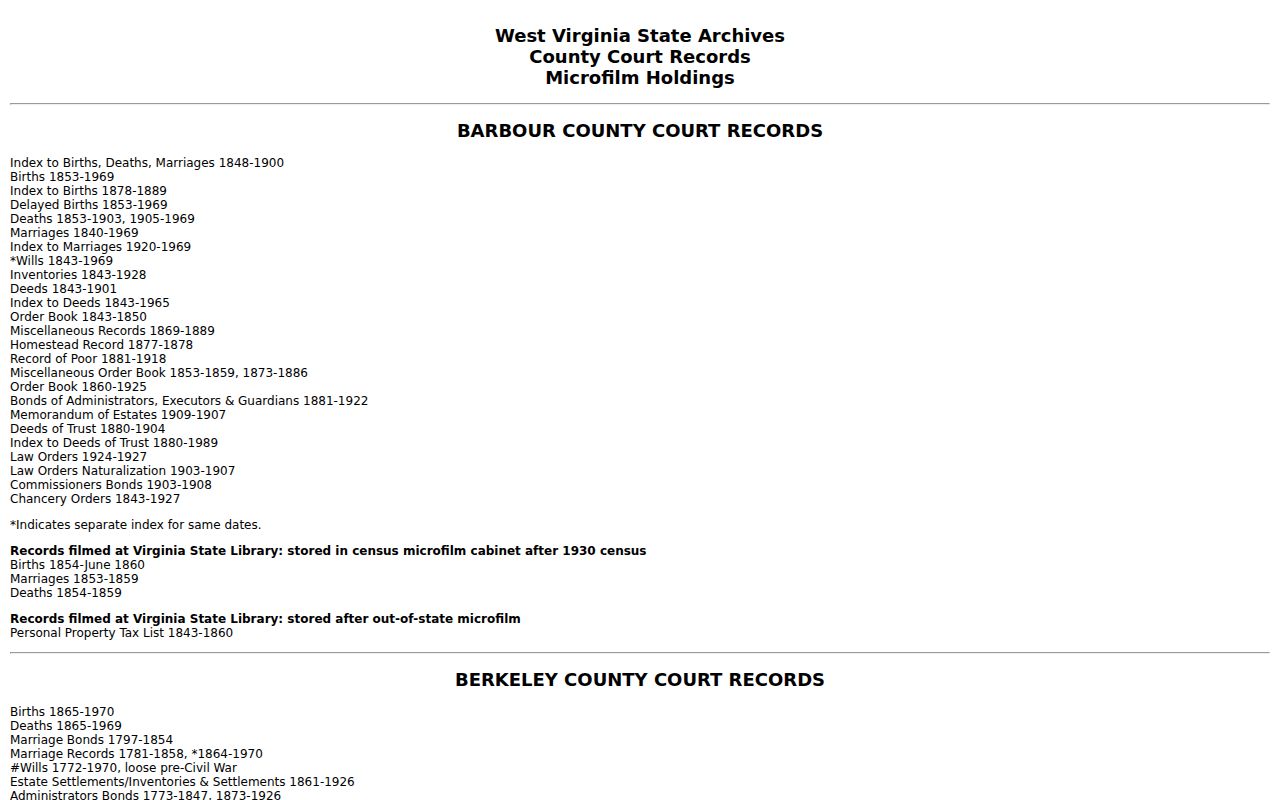
Archive catalogs help locate a source; the clerk remains the official copy custodian.
Monroe County Liens and Releases
Liens and releases live beside the deeds in Monroe County property records. Mortgages arrive with assignments, modifications, and releases. A paid loan can still sit in the index. The lien stays visible until the lender or trustee records its satisfaction. That satisfaction appears in the deed records. The County Clerk's schedule covers mechanics liens, judgments, statutory liens, lis pendens, releases, plats, and UCC-related filings. A lis pendens is short notice. It signals litigation affecting land, not a final ruling on title. Pull the case reference. Then track down any dismissal, final order, or recorded release.
Ordinary land mortgages and liens belong in county land records. The Secretary of State notes that common land, house, and commercial-building liens are not ordinary UCC filings. Fixtures, extracted minerals, and timber collateral may be. Match the search to the collateral. Never read an old filing as proof a lien still binds the parcel.
| Record | Where to check | Follow-up |
|---|---|---|
| Mortgage / deed of trust | County Clerk land instruments | Assignment, modification, release, or satisfaction |
| Mechanics or judgment lien | Clerk and relevant court | Recorded release or final order |
| Lis pendens | Clerk and WVPASS case | Underlying case and later disposition |
| Fixture or mineral filing | West Virginia SOS UCC | UCC-3 termination and related land record |
West Virginia's UCC guidance covers those collateral types instead. The Secretary of State's UCC filing-procedures page posts the current filing fee and its online-search access notice.
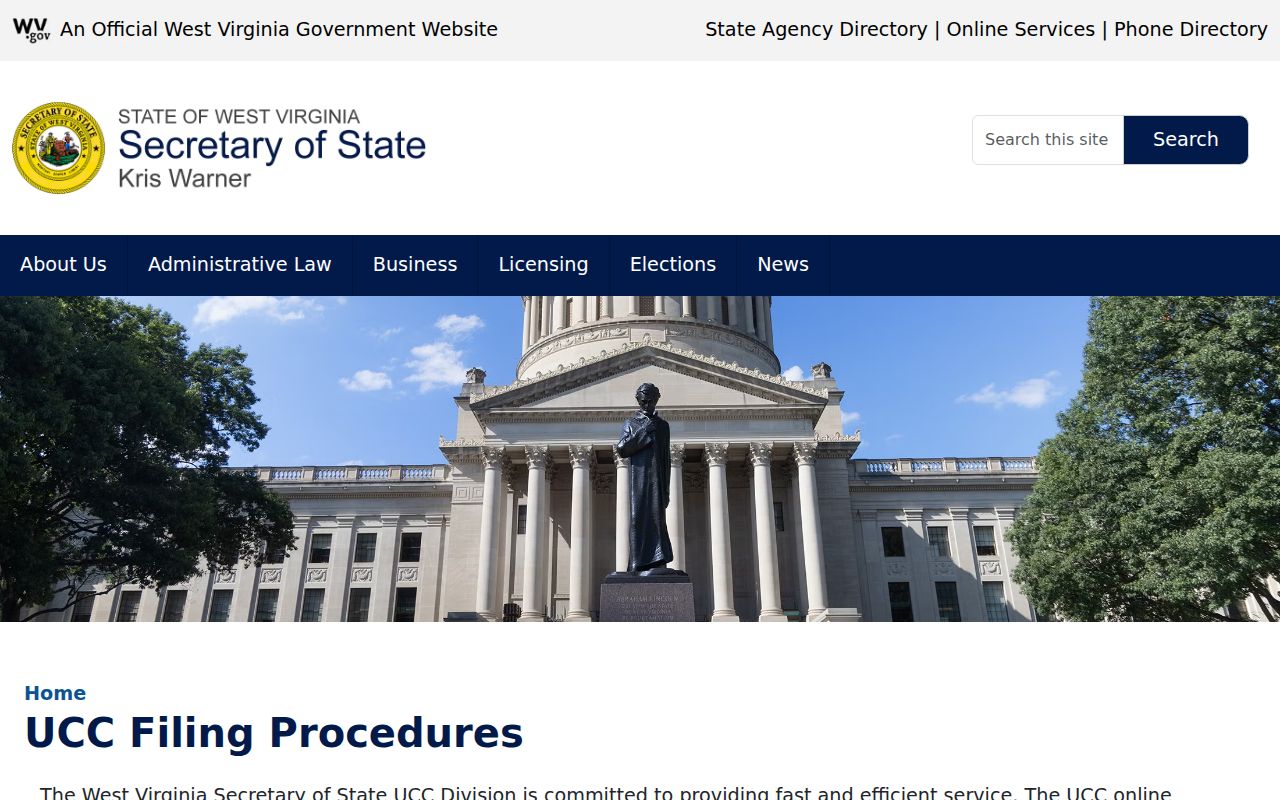
The UCC search is a limited supplement; it does not replace the county deed and release trail. A lien filing matters only when the matching release is tracked down too.
Probate and Monroe County Deeds
Probate transfers land differently. An estate sale rarely appears in Monroe County property records as a direct deed from the decedent to a buyer. The County Clerk keeps wills and probate, and a later executor or administrator deed often supplies the conveyance. Start with the decedent's name. Then find the fiduciary, any inventory or settlement reference, and the fiduciary deed or a deed from heirs. A tax roll can still name the decedent. It proves nothing about distribution. Vital records support a family timeline. They cannot transfer or establish title to Monroe County land.
West Virginia keeps current vital certificates restricted by statute. Birth records generally open after 100 years, and death, marriage, divorce, and annulment records after 50, with exceptions for protected identifiers and medical-use information. The state certificate route and the Monroe marriage form differ in fees and eligibility, so ask the proper custodian rather than treating a current certificate as an open index. The Vital Registration page details the certified-copy route.
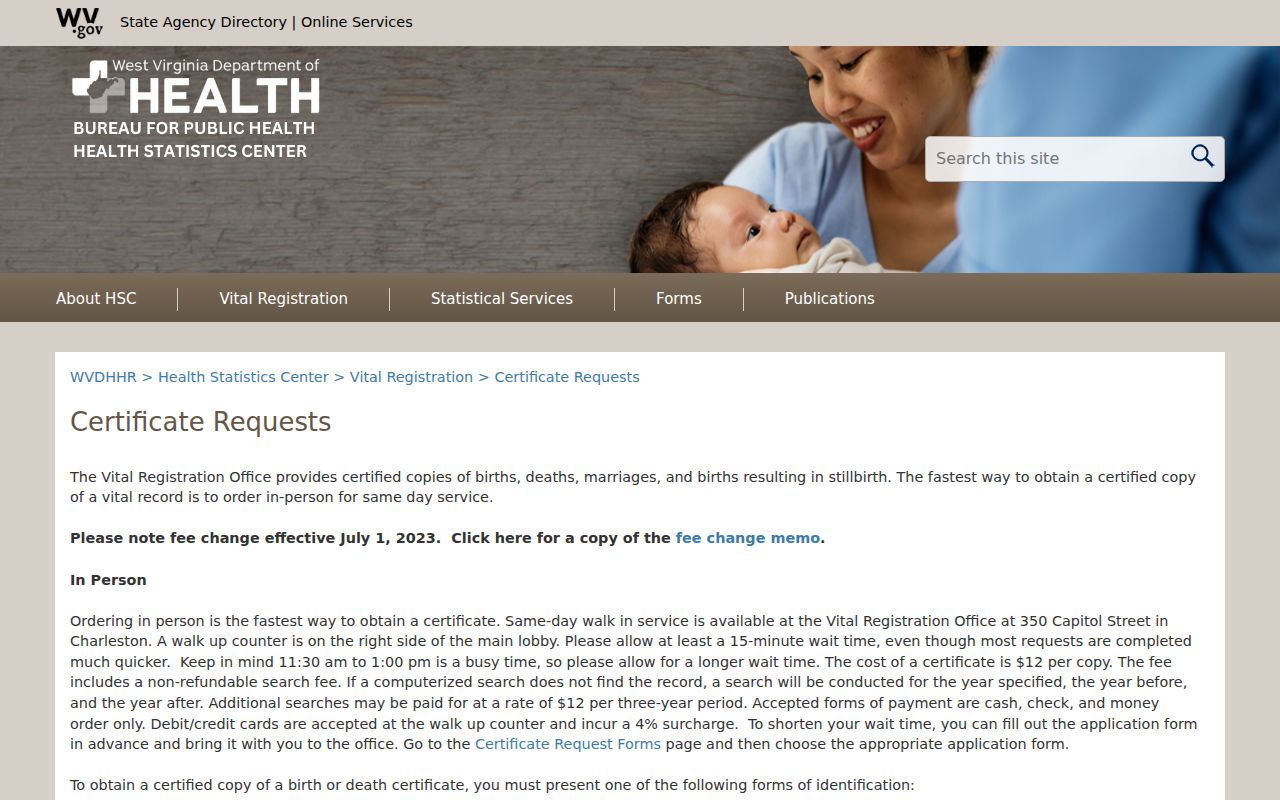
A vital certificate can support a family-history timeline. It cannot transfer or establish title to land. Transfer-stamp information on a Monroe County deed evidences the recorded transaction, not a guaranteed market value. Consideration may be nominal, exempt, a family transfer, or a correction, so keep the instrument type and party roles with the amount.
Monroe County Court Leads for Land
WVPASS launched on March 10, 2025, opening statewide circuit and magistrate case access. Foreclosure, partition, quiet title, and lien-enforcement leads start there. Search borrower, owner, lender, trustee, or other party names. CourtPLUS manages cases, and Vault stores the scans. Public files that are not online can still be requested at the circuit clerk. Sealed, juvenile, and confidential material is never public. A docket shows a claim or judicial action, not a lien that survived, was paid, or changed title. Use the case number. Then request pleadings, exhibits, final orders, or a certified copy, and compare the decision with the release in the Monroe County land records. Federal litigation may require PACER and the federal clerk. The Monroe County Circuit Clerk page provides a local route for circuit-court forms and record resources.
Court documents that are not online start with the local Circuit Clerk and a case number. The WVPASS public access page explains the statewide route.
Court portals find leads; the County Clerk records deeds.